


For many families, the thought of paying for education expenses can feel overwhelming. The cost of education has changed dramatically over the last several decades, and many parents and grandparents wonder:
“How much should we save?”
“What if the child does not attend college?”
“What happens if we save too much?”
A 529 plan was once viewed as a simple college savings account. Today, changes in tax law and education options have made 529 plans a more flexible planning tool that can help families prepare for education expenses while maintaining options for the future.
The Rising Cost of Education: Why Planning Matters
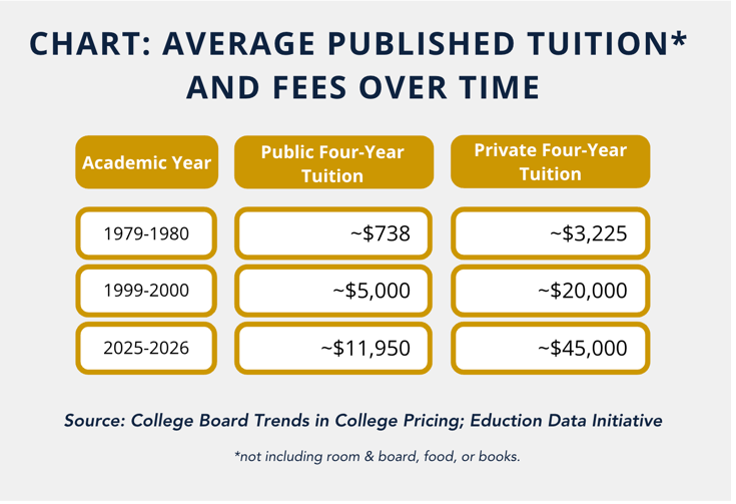
The cost of education has increased significantly over time.
In the 1979–1980 academic year, average tuition and fees at a public four-year institution were less than $1,000 per year. Today, average published tuition and fees at public four-year universities are approximately $12,000 per year for in-state students and approximately $45,000 per year at private nonprofit four-year institutions.
The challenge is not simply the current cost of education — it is the future cost.
A child born today may not attend college for another 18 years. If education costs continue increasing, families could be planning for a much larger expense than today’s price tag suggests.
Think of education costs like a moving target. Saving for tomorrow’s education using today’s costs is like planning a road trip while ignoring that the destination keeps moving farther away.
What Is a 529 Plan?
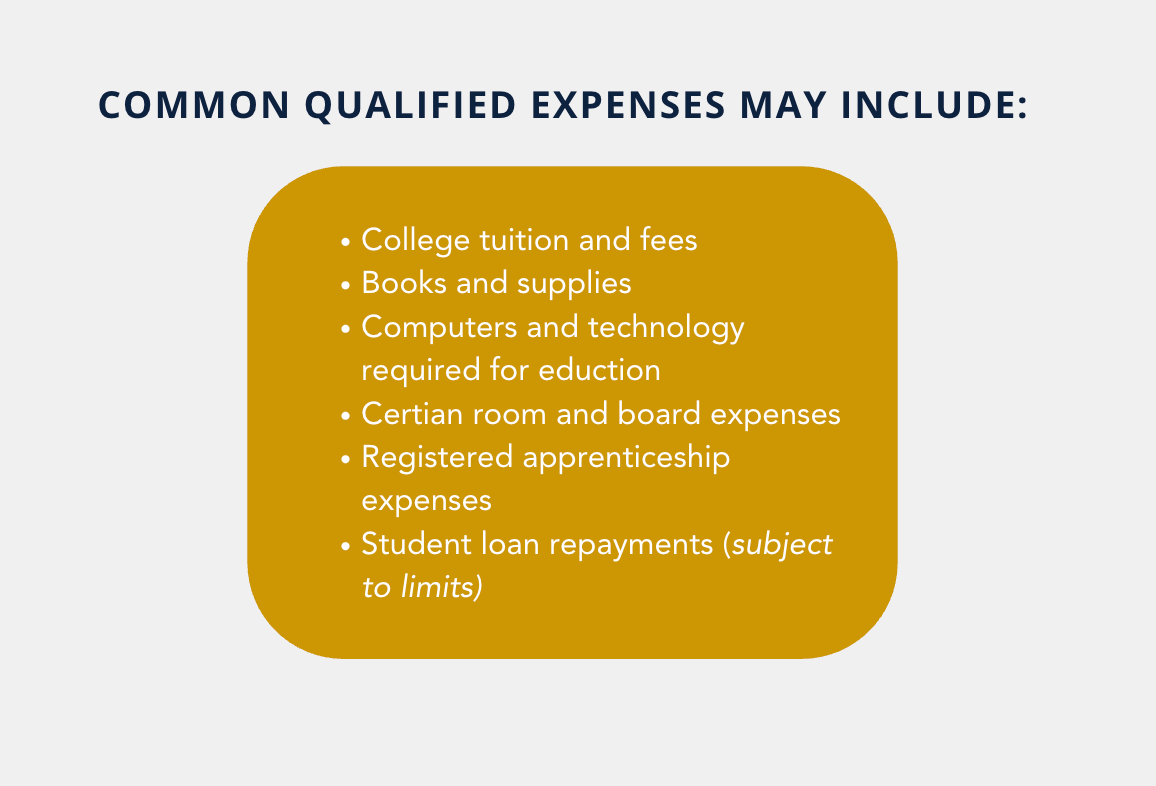
A 529 plan is a tax-advantaged savings account designed to help families save for qualified education expenses.
The biggest benefit:
Money invested in a 529 plan can grow tax-free, and withdrawals used for qualified education expenses are generally not subject to federal income tax.
The goal of a 529 plan is simple: allow families to save today so future education expenses are easier to manage.
Using Funds for Expanded Education Opportunities
Education today looks different than it did decades ago.
Qualified education opportunities may include more than a traditional four-year university.
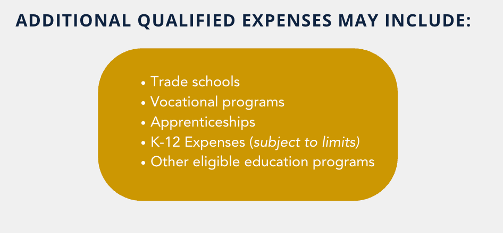
Families now have more flexibility in matching education savings with the path that makes sense for the student.
How Much Should You Save?
There is no universal answer.
Some families want to fully fund four years of college. Others want to provide a portion of the cost while encouraging children to contribute.
Consider three families:
Example 1: Funding 100% of Education
A family expects a future education cost of $100,000.
They decide to save aggressively from birth, allowing compound growth to help fund the future expense.
Example 2: Funding 50% of Education
A family wants to provide support but also expects the student to contribute through scholarships, work, or savings.
Their goal becomes $50,000.
Example 3: Funding 25% of Education
A family wants to provide a financial foundation while prioritizing other goals, such as retirement savings.
Their goal becomes $25,000.
The right amount depends on the entire financial picture — including retirement goals, cash flow, other investments, and family priorities.
What Happens If the Money Is Not Used for College?
One of the biggest hesitations families have is:
“What if my child does not go to college?”
This concern is understandable. Families do not want to save thousands of dollars into an account that may become difficult to use.
Fortunately, 529 plans have become more flexible.
Depending on the situation, families may have options including:
1 1. Changing the Beneficiary
A 529 plan beneficiary can generally be changed to another eligible family member.
Examples:
- A sibling
- A parent
- Another relative
This can allow education savings to continue supporting future generations.
2 2. Rolling Certain 529 Funds into a Roth IRA
Beginning in 2024, SECURE 2.0 created a new option allowing certain unused 529 funds to be rolled into a Roth IRA for the beneficiary.
However, there are important restrictions:
- The 529 account must generally have been open for at least 15 years
- Rollovers are subject to annual Roth IRA contribution limits
- The lifetime rollover maximum is $35,000
- Other requirements and limitations apply
This change addresses a common concern:
“What happens if we save too much?”
A 529 plan is no longer simply a savings account that ends when education ends. It may provide additional flexibility as part of a broader financial plan.
Education Planning Is Only One Piece of the Financial Plan
Saving for education is an important goal — but it should fit within a family's complete financial picture.
Before deciding how much to contribute to a 529 plan, families should consider:
- Are retirement goals on track?
- How much education funding feels realistic?
- What tax strategies may be available?
- How does education funding fit with other family goals?
A financial plan helps connect these decisions together.
A 529 plan may be a powerful tool, but the most effective strategy is the one that fits into the bigger picture.
Final Thoughts
Education costs have changed dramatically, and families today have more options than previous generations when it comes to saving.
A 529 plan is no longer just a college savings account. With expanded education uses and new flexibility around unused funds, it can be part of a broader strategy for supporting future generations.
The question is not simply:
“Should we save for education?”
The better question is:
“How does education planning fit into our overall financial plan?”
Working with a financial advisor can help families evaluate their options, understand the tradeoffs, and create a strategy aligned with their goals.
Sources
- IRS – Qualified Tuition Programs (529 Plans)
- IRS Publication 590-A – Contributions to Individual Retirement Arrangements
- College Board – Trends in College Pricing and Student Aid
- Education Data Initiative – Average Cost of College by Year