


The financial world does not stand still.
Tax rules change. Retirement contribution limits change. New legislation can affect retirement accounts. Markets move through different interest-rate and economic environments. Even the way investors access financial information continues to evolve.
For investors who have spent years building wealth, staying informed is not about becoming a financial expert. It is about understanding the decisions that may affect your financial plan—and knowing when it is time to ask a better question.
Financial Knowledge Is a Moving Target
Financial education is often treated as something you learn once: understand the basics, create a plan, and move forward.
But financial planning does not work that way.
The rules surrounding your money can change long after your original plan was created.
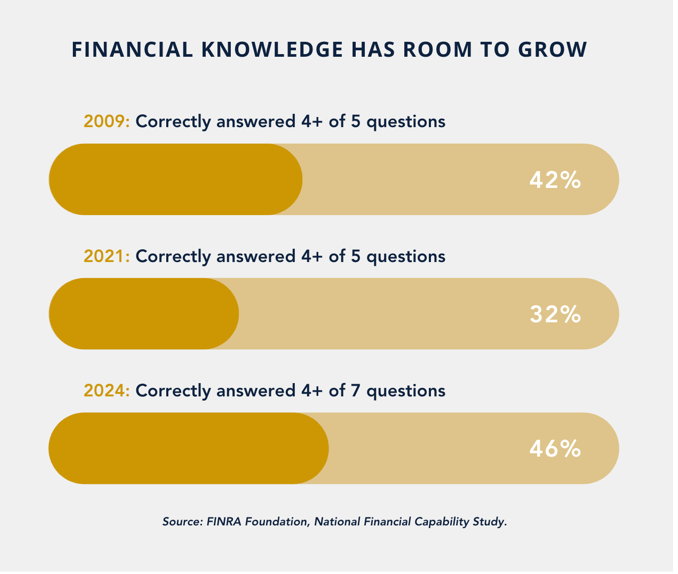
Consider financial literacy itself. The FINRA Foundation's National Financial Capability Study has tracked Americans' financial knowledge for years. In the 2009 study, 42% of respondents answered at least four of five core financial literacy questions correctly. By 2021, that figure had fallen to 32%.
The most recent 2024 study uses an expanded seven-question measure. On that measure, 46% of respondents answered at least four questions correctly.
The takeaway is not that investors need to memorize every financial rule.
The takeaway is that there is value in continuing to learn.
The Rules Can Change While Your Plan Stays the Same
One of the clearest examples is retirement account rules.
The annual employee contribution limit for a 401(k), 403(b), governmental 457 plan, or the federal government's Thrift Savings Plan increased from $22,500 in 2023 to $24,500 in 2026.
The IRA contribution limit increased from $6,500 in 2023 to $7,500 in 2026.
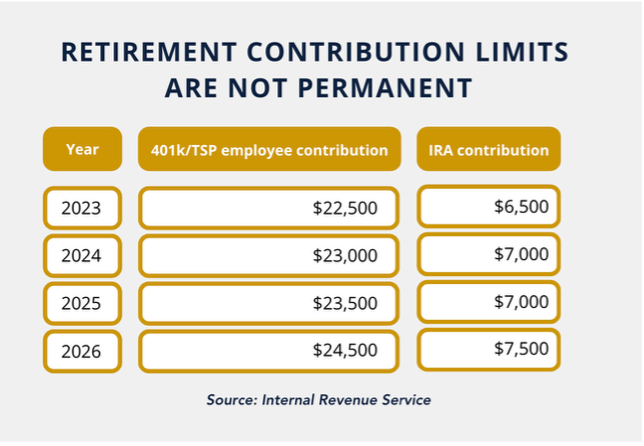
For someone contributing the maximum to a workplace retirement plan, the difference between the 2023 and 2026 limits is $2,000 of additional annual contribution capacity.
That does not mean everyone should contribute the maximum. It does mean that knowing the current rules gives you the opportunity to ask whether the change matters for your situation.
And contribution limits are only one example.
Required minimum distribution rules have changed. Roth rules have changed. Catch-up contribution rules have changed. Tax brackets and other inflation-adjusted amounts change over time.
A plan built several years ago deserves to be revisited as the rules around it evolve.
More Information Does Not Always Mean Better Information
Today, investors have virtually unlimited access to financial information.
That sounds like an advantage—and it can be.
But information without context can create another problem.
A headline about interest rates may be accurate but irrelevant to your portfolio.
A news story about a new tax provision may be important but not answer the question of whether it affects your retirement plan.
A change to retirement account rules may create an opportunity for one investor and make little difference to another.
The challenge is increasingly knowing what information matters to you.
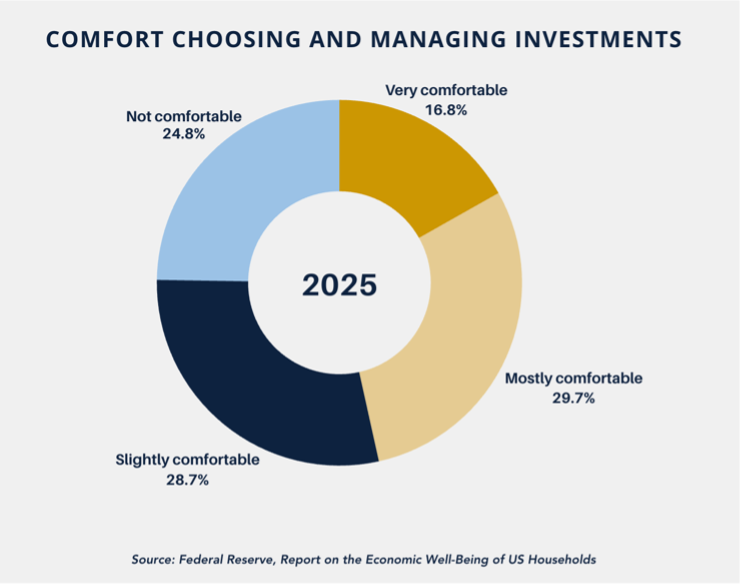
The Federal Reserve's report on the economic well-being of U.S. households found that only 47% of adults were mostly or very comfortable choosing and managing their investments.
This distinction matters.
You do not need to manage every financial decision yourself.
But understanding financial concepts can help you recognize what deserves your attention—and what questions to bring to your financial professional.
What Can You Do?
Staying informed does not have to mean spending hours reading financial news or trying to understand every new piece of legislation.
We believe education can be much simpler.
That is one of the reasons Keen & Pocock Financial Partners is expanding our educational content on social media.
Use Our Content as a Starting Point
Our goal is to take financial concepts that can feel complicated and make them easier to understand.
Each piece of content is designed to give you a small, useful takeaway—whether that means learning a new financial term, becoming familiar with a change that may affect investors, or questions to consider.
You might see a post explaining a financial term you've heard before but never fully understood.
You might see a breakdown of a retirement rule or tax concept.
You might see a market-related post that provides context around something appearing in the financial news.
The goal is to help you know what questions to ask.
Make It a Habit
Consider making financial education part of your regular routine.
Follow Keen & Pocock Financial Partners on LinkedIn, Facebook, and Instagram and take a few minutes each week to learn something new.
(see links to our social media platforms at the end of this article)
Over the course of a year, those small moments can add up.
More importantly, they can help you become more familiar with the language and concepts that come up in your financial planning conversations.
Bring What You Learn Into Your Meetings
The most valuable part of financial education is what happens after you learn something.
If one of our posts makes you think:
"Does this apply to me?"
Bring that question to your next meeting.
Maybe you see a post about retirement contribution limits and wonder whether you should adjust your contributions.
Maybe you learn about a tax concept and wonder whether it could affect your retirement income.
Maybe you see a financial term you've heard before and finally understand what it means.
Those questions can lead to more meaningful conversations about your financial plan.
Our social media content is not designed to replace those conversations. It is designed to complement them.
Keep Learning. Keep Asking Questions.
Your financial plan is designed around your life.
As your life changes, the markets change, and the rules change, your understanding should evolve too.
You do not need to know everything.
You just need to keep learning.
Follow Keen & Pocock Financial Partners on LinkedIn, Facebook, and Instagram for weekly educational content designed to help you stay informed between meetings.
[LinkedIn] | [Facebook] | [Instagram]
Educational content is intended for general informational purposes and is not a substitute for individualized financial, tax, or legal advice. Please consult your appropriate professional regarding your individual circumstances.
Sources
- FINRA Foundation, National Financial Capability Study — data on financial knowledge among U.S. adults.
- Federal Reserve, Report on the Economic Well-Being of U.S. Households — data on Americans' comfort choosing and managing investments.
- Internal Revenue Service — current retirement contribution limits and historical contribution limits.